Thursday, March 24, 2011

Had Myself A Meade Read

I pulled a couple of random selections of L.T. Meade works from my antique library, Light O' The Morning and Frances Kane's Fortune. For those of you not familiar with Meade, she was a extremely prolific 19th century Irish authoress, but is strangely an obscure name in today's literary world. Throughout her life, she managed to write over 300 novels and hundreds more articles, editorials and short stories for several newspapers and magazines, including Strand magazine, famous for first publishing the Sherlock Holmes stories by Sir Arthur Conan Doyle. You would think it would be cake to find information about a woman so widely published but reality turned out to be the exact opposite of that! I researched for hours just to find enough to piece together a meager outline of this talented woman's life:


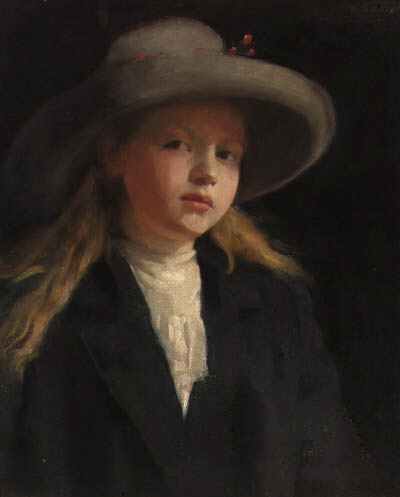
L.T. Meade 1910


L.T.  Meade was born Elizabeth Thomasina Meade in 1854 in Bandon, Cork County, Ireland to Reverend R.T. Meade and his wife Sarah Lane Meade. R.T. was from nearby Nohoval in Cork County. Elizabeth sometimes went by the name Lillie but started using the pen name L.T. at the age of seventeen when she wrote her first novel. L.T. was determined to make a living with her talent, though her father was what one might call "old school" today, and did not approve of women working outside the home. L.T. found the courage and freedom to move to England in 1874 after coming to terms with the unexpected death of her mother and her father's subsequent remarriage.


Colorful Bandon, Ireland

In 1879, at the age of 34, L.T. married Alfred Toulmin Smith, an English solicitor (lawyer), settled in London and went on to have 3 children with him,  all the while continuing to write. The reason Meade was able to have as large a collection of work as she did was due to her method of working on 2-3 books at once, dictating plot lines to assistants she hired to type or write out her thoughts. While Meade enjoyed writing, she also considered it a serious job, the payments for her work providing extra comfort for her family. This led her to write in several different genres, anything from children's stories to murder mysteries for adults. The mysteries were a collabrative effort with Dr. Robert Eustace Barton, who wrote under the name Robert Eustace (not everyone had a super sexy pen name people). These mysteries often featured female criminal masterminds and gang leaders! Meade also collaborated with "Clifford Halifax, MD" (real name Dr. Edgar Beaumont) to write Stories from the Diary of a Doctor. You'd think that'd be a pretty full plate for any working mom but Meade piled it on even more! While writing all these stories, she also spent six years as the editor of Atalanta magazine (not a typo, that was the name of the mag) for girls / young ladies.

Meade was able to make some serious bank as a female author in a time when women writers were often still hiding out under male pen names. Meade had her mysteries and detective stories printed right alongside Doyle and proved herself to be a talent in her own right (too bad her rep did not carry through as well to modern times but hey, I guess that's what people like me are for). Meade passed away October 1914 at the age of 60.

The two books I mentioned reading at the top of this post were from her work in girls' stories / women's literature. I pulled the two books at random but they both turned out to be about young ladies needing to save their family homes. In Light O' The Morning, there is no romance for the female lead to find, as you might expect for the time period, but in fact it is the story of Nora, a young girl coming into her teenage years who is shocked to find that her parents are pretty much bankrupt and have been keeping it quiet for too long. To be more specific, it is actually the father (an Irish nobleman and landlord) that has been keeping the seriousness of the situation from everyone - not even Nora's mother is aware of the extent of the financial trouble, though she's been slowly selling off her treasured bobbles for years trying to keep clothes on her kids and send her son to college. Turns out that while Dad might be quite the charming Irishman, he's not so good with crunching numbers, and the ancestoral castle is about to be taken out of his ownership.  Nora takes it upon herself to turn things around, and surprisingly finds her life being threatened by a local tenant of her father's when the tenant fears being thrown out of his home for non-payment of rent


.


Nora's schemes take her all over Ireland and England, where she enlists the help of her cousin Molly who is similarly wild in nature. The story overall is a charming, easy read with a few dark, unexpected moments, particularly with the thinly veiled death threats against such a young girl. There is also quite a sprinkling of Gaelic terms. One thing I loved about Nora's character was the fact that she never apologized or felt ashamed for who she was - if only the adults in her life could have done the same!

In Frances Kane's Fortune, the title character is a spinster and all of 28 years old! (gasp!) She met an amazing guy ten years ago but he apparently had some traveling to do just at the pivotal moment in their relationship and ran off. She never heard a word from him and presumed him dead. Only problem is she never actually got over him and in doing so, ruined herself for any other man or potential romance. She decides instead to live with and help out her father manage The Firs, the family estate.


Just as she has come to terms with this lifestyle,  this old flame writes her a letter basically saying "hey, how's it going and would you like to marry me?" The nerve of some guys! But of course, getting a letter like that was beyond Frances' wildest dreams, so she writes back saying "Hellz Yeah!" but then her dad goes all Lundbergh on her happiness bubble with his "I'm gonna have to go ahead and stop ya there".


You'll find that poor Frances has an unbelievably selfish, needy father. Just awful! He gives her a big sob story about how she owes it to him to stay with him and stop with all this silly love and marriage talk because she's not all that pretty anyway - yeah.. .he goes there! Her own father!  To top it off, it comes out that he might have conveniently "forgot" to pay some loans over the years so the family home is about to be foreclosed on. Frances is cornered into making the tough choice of saving her father who doesn't really deserve it (as he got himself in the situation) or shrugging him off with a "best of luck" and finally starting her own life. Sadly, she leans toward family loyalty rather than herself - but as is often the case, there is a light at the end of her tunnel - and it's not just the oncoming train = ) Luckily, Frances has her cousin "Fluff" (nicknamed for her lighthearted personality) to push her toward her rightfully deserved pot of gold.  Despite all of Frances' protesting, Fluff manages to convince loverboy Phillip to stick around through clever schemes, getting them together or just getting them thinking warmly of each other in even the most negative times.


Frances Kane's Fortune proves to be an example of the old expression "True love will always find a way."

Some food for thought to leave you with, a great quote near the end of Frances Kane's Fortune - Meade worded this perfectly:

“It is neccessary for some people to go away to be missed. There are very quiet people in the world, who make no fuss, who think humbly of themselves, who never on any occassion blow their own trumpets, who under all possible circumstances keep in the background, but who yet have a knack for filling odd corners, of smoothing down sharp angles, of shedding the sunshine of kindness and unselfishness over things generally. There are such people, and they are seldom very much missed until they go away. Then there is a hue and a cry. Who did this? Whose duty was the other? Where is such a thing to be found? Will nobody attend to this small but necessary want? The person who never made any talk, but did all the small things and made all the other people comfortable, is suddenly missed, and in an instant his or her virtues are discovered.'”

Monday, March 7, 2011

"Amerasian" Advocate and Author Pearl S. Buck

I always intend to write these posts earlier in my day but I am awful about being sidetracked or distracted. I don't know if it's quite ADHD as much as maybe just me trying to cram too many projects into each day to the point of feeling like I got virtually nothing done lol. ANYHOOO... yeah so anyone read much Pearl S. Buck? For many, The Good Earth was required reading in school - that's where I first heard of her, and I intend to reread that one some day as I do remember how much I enjoyed it the first time. That "first time" was about 16 years ago though, so the details of that particular book are a bit hazy in my memory. This time around however, I  decided to delve into three of her other novels, two of the Asian theme she was famous for, and a lesser known Civil War era novel.                                                                                                                                                


THE ANGRY WIFE is the story of the Delaney family, particularly its patriarch, Pierce, trying to put their lives back together in the aftermath of the Civil War. Pierce is trying to accept that times have changed, former slaves are freed people now, and if he wants any bit of the old glamorous life he once had back, he cannot rest on his laurels. Pierce seems ready to move forward but unfortunately his spoiled, petulant wife refuses to accept the freeing of the slaves, loudly protests them being given wages and damn near has her head explode when she discovers that her brother-in-law, Pierce's brother Tom, has taken Bettina, one of the mulatto servants, as his sort of common law wife. At points throughout the story, I felt pity for Pierce being stuck in the middle of trying to let his brother live his life and having to listen to his wife shriek about what an abomination the world was becoming with all the talk of equality. Then I thought, "Wait a minute, this guy is being a wuss and constantly caving into his wife's every little complaint and whim!" Note to guys: it's more manly and attractive of you if you put your foot down once in awhile and let us know how YOU want things (we as women just don't tell you that - it's not ladylike to admit it I guess lol). Out of the three Buck novels I read this round, this one was my favorite. The ending made me shake my head and want to slap Pierce - but that's just me...

The other two novels, THE NEW YEAR and THE HIDDEN FLOWER were of Buck's familiar Asian - themed works. In The New Year, Christopher Winters is a Korean War veteran and lawyer running for the office of governor in Pennsylvania when he receives a letter from his illegitimate son in Korea. Yeaaa... about that... Winters got married just days before being shipped to Korea, got to Korea and after a time discovered he was pretty lonely, homesick and afraid he could be killed any day, much like any soldier would be in a foreign country. He meets Soonya Kim, a local girl, enjoys her company and soon has a relationship going with her. He and Soonya move into a small house in Korea together, while he is stationed there, and since it isn't really mentioned, I'm guessing he doesn't bother to tell his wife back in the States that he's shacking up with a Korean woman. Soonya inevitably becomes pregnant, and conveniently enough, Winters' tour ends about a month after his son's birth. He gives her his version of "I'll call ya" and goes back home. Fast forward years later, his son is now 12 and wondering "what's up dad?" In another interesting twist, in the years following his return from Korea, Winters and his wife have been unable to conceive a child of their own. You can imagine the complications that ensue in his marriage and political pursuits from there. The story here wasn't bad, but OMG the dialogue of these characters was so textbook grammatically correct that it was unnatural! If your wife calls you out about not mentioning you had a kid while you were living overseas, the natural response is not usually a calm "Oh yes, quite right my darling, I was most terribly out of line." No, in real life there are tears, probably some yelling, maybe some "get the hell outta here!" but when you make dialogue too prim and proper it can only remind one of a ridiculously funny Monty Python sketch. I found a slightly more promising story in The Hidden Flower. Here, the story takes place in Japan and involves a US Army Lieutenant, Allen Kennedy, and a local doctor's daughter he meets, Josui Sakai. After only a handful of secret rendevous and "hey funny that I bump into you here" moments, Josui and Allen decide they are in love and come hell or high water WILL be together, though both of their respective families oppose the match wholeheartedly, partly because both Josui and Allen are unofficially intended for other people, at least in the eyes of their parents. This story was beautifully written, and gives wonderful glimpses into all the great traditions of Japanese culture. My one gripe with this story is that if one is going to write such a potentially powerful love story, it should not be rushed. I just didn't find it believable that Josui and Allen, having never known love before, having nothing to compare it to, could decide after only a scant few words exchanged, that they had eternal love between them. Thankfully, this little "flaw" in the story actually makes the ending work better, though even the ending was a bit ridiculous as well, almost as if everything that just transpired in the last 180 odd pages could be easily settled with a good, firm handshake or something... 

There were a few elements that I noticed popped up repeatedly in these works, such as the use of White Sulphur Springs, West Virginia as a escape/vacation locale for characters, as well as the topic of "half-breed" children (discussed in each of these novels). I also wondered how she wrote so well regarding Asian cultures. When I started reading up on her life, it all started making sense, and I also saw that her own real life read much like some of her novels!


 Buck was born Pearl Sydenstriker on June 26, 1892 in Hillsboro, West Virginia (West Virginia / Virginia area was the location of Malvern plantation in The Angry Wife). Her parents worked as missionaries and moved the family to Chinkiang, China, along the Yangzi River - an area mentioned in The Good Earth, (now known as Zhenjiang) not long after Pearl's birth. Pearl was known in China as Sai Zhenzhu. With this upbringing, Pearl learned Chinese before she learned English! Imagine being a child fluent in two of the world's most difficult languages to learn! It was a happy existence, until her family was forced out of China during the Boxer Rebellion, when groups of Chinese native rose up in opposition to Western influence and Christianity they felt was taking over Chinese culture. Pearl was able to return to China at the age of 15 when she was enrolled in a boarding school in Shanghai. She also worked at Door Of Hope, a shelter for Chinese women and girls who were destitute, homeless or trying to get out of the prostitution or slave trades they were often sold into. In 1910, Pearl traveled back to the States to pursue a psychology degree at Randolph-Macon Women's College in Lynchburg, Virginia. After graduating in 1914, she taught psychology there until her mother became ill and Pearl decided to return to China.


Back in China, Pearl married agriculturalist John Lossing Buck and continued work as a teacher and Presbyterian missionary. She also served as interpreter for her husband. By the 1920s, she was working as a English and American Literature professor at Nanking University.

Pearl had only one biological child, a daughter named Carol, who was unfortunately mentally disabled due to the genetic metabolic disease, phenylketonuria or PKU. During her pregnancy, Pearl's doctor found a tumor in her uterus which required a hysterectomy immediately after Carol's birth.This may have provided inspiration for the infertility of Christopher Winter's wife in The New Year.

 Pearl returned to the States in 1924 to seek medical help for her daughter's condition. {On an interesting sidenote, the result of Pearl's tireless work trying to find the best treatments for her daughter is that now testing all babies for PKU after birth is standard procedure in US hospitals! } During this time, Pearl also completed her M.A. in literature from Cornell University. She returned to China in 1927 only to experience yet again her family being evacuated to Japan during a civil war in China.
Carol Buck

Not long after, Pearl and John Buck divorced, and Pearl married her publisher, Richard Walsh, who owned John Day Company publishing firm (I wondered about this, because I noticed several of Pearl's first edition novels are listed with John Day - guess if you want to get your work out there as a writer, marrying a publisher with his own friggin company doesn't hurt! : - P). They moved to Pennsylvania (setting for The New Year), and Pearl continued to write, sometimes under the pen name "John Sedges", as well as expand her efforts as an advocate for civil rights and mental disorder/disability awareness. In 1938 she won the Nobel Prize for Literature - the 1st American woman as well as the 3rd American in history to accomplish this! While living with Walsh in the US, they adopted several more children and remained together until Walsh's death.

During World War 2, Pearl found herself struggling with cultural identity, for though she was a US born citizen, she grew up in and traveled throughout China and Japan. Having these nationalities at war with each other, I'm sure it must have been confusing to know which side to be on! As a result,in 1941 Pearl created the East-West Association, an organization dedicated to improving relations between Caucasians and Asians. Later, in 1949, she created the Welcome House, an adoption agency specializing in what she coined as "Amerasian" children, the half-breed, illegitimate, sometimes orphaned but usually just unwanted children of Asian native women and US G.I.'s. In 1965, the Pearl S. Buck Foundation also set up a branch office in Korea, offering a welfare program for "Amerasian" children not placed with the orphanages and their mothers.

This is the Pearl S Buck Memorial Hall built in Korea
 as an acknowledgement
 of all her efforts for Asian people around the world.


Pearl died March 6, 1973 at the age of 80 in Vermont (meaning yesterday would have been her 119th birthday - totally unintentional to write this post on that date but hey Happy Birthday girl!!). All of her original manuscripts and papers are archived and divided between Radolph Macon Women's College in Lynchburg, VA (home of the famous Jack Daniels distillery!)  and the Pearl S. Buck Birthplace Foundation in Hillsboro, West Virginia.  And White Sulphur Springs, WV? Well, the massive Greenbrier resort there is only 25 miles south of Hillsboro - so I'm sure it was a desirable and nearby vacation spot for Pearl's friends and family, or at the very least she was aware of the popularity and proximity of the place, thus making it a nice locale to repeatedly pop up in her novels.

Look at these shots of Greenbrier - the place is so gargantuan that they call themselves "America's Resort" (though from what I can tell from reading and viewing pictures,  it looks preeeettty elitist to me!) That inside shot is insane!

Wednesday, January 19, 2011

A Smattering of Underwhelming Breezy Reads

Let me start out by saying here and now that I do not hate contemporary fiction by any means. In fact, most times I pick up these books with the highest hopes only to be let down by half-hearted attempts by authors trying to write that deep, edgy, "ethereal" novel that they believe begs for a screenplay. Sadly, they often get said screenplay. Here are three breezy, quick read novels, perfect for that mindless day at the beach or the improptu weekend getaway, but unfortunately lacking a good deal of  substance (at least for me). I'm not saying there's NO entertainment value whatsoever here, but I doubt these stories will be the kind that will linger in the memory days after finishing them.

First up is the much lauded Water For Elephants by Sara Gruen. This is basically the story of a veterinary medicine student, Jacob, who is unexpectedly orphaned just a couple days before he is set to graduate. He walks out on his Ivy League education the day of his final exam and spontaneously jumps onto a train that belongs to a traveling circus, later joining the staff of this circus. He ends up falling for Marlena, horse (and later elephant) performer and the wife of the animal menagerie supervisor, August.


A number of people have recommended this book to me since it was first released, and I always seemed to have another book I was in the middle of. When I got word that the movie version was soon to be released, I figured it was time to see what all the crowing was about and went online to find a reasonably priced secondhand copy. I am a stickler for reading a book before its plot is potentially spoiled and hacked up for the big screen. Little did I know that I would have to compete with die-hard Twilight fans to snatch up these copies, maybe in the hopes of ol' Edward signing one? The online prices seemed to be hiked up everywhere! Wish they would realize he won't be Edward in this movie. Anyhoo, finally found a copy and was excited when it arrived as old school circus days IS one of my favorite subjects for a novel! Wow, was this one a snoozer for me! I will give Gruen props for research because I could definitely picture the circus environment and having been a former CNA, I will say that her portrayal of nursing homes and the patients there was pretty dead on. Aside from that, I felt myself becoming so indifferent to the rushed and formulaic love story between Jacob and Marlena. August was just flat out insane! Why everyone just brushed off his bipolar/rage issues as a personality quirk is beyond me. I did like some of the side characters, such as Kink the dwarf-sized clown and even Rosie the elephant. For a character that didn't have any dialogue, I often found myself more entertained by her antics than any of the shenanigans going on with the two-legged characters!

So for this one, I have to say - if you are craving a great story about the circus, I recommend Gary Jenning's Spangle series (you can find a link to these books at the bottom of this blog at my BookJetty page). It actually goes back even further in history, when circuses traveled by horse drawn wagons! The story covers three novels and gives the reader the chance to really get to know everyone in the troupe. There are brief moments of graphic sexual imagery here and there (I think this may have been done to give one a sense of the exotic life of gypsy traveling bands.. not sure though) but once you get past that, there is a TON of deeply researched history, particularly when the troupe travels all over Europe performing for famous nobility.

And for Twilight fans ( I don't judge - read what makes you happy!) I include below a shot of Patterson and Reese Witherspoon (casted to play Jacob and Marlena) in a promo shot as well as the movie trailer. I don't understand the casting for Marlena's husband, August. August, though crazy, is still suppose to be good-looking and charismatic (a large part of why Marlena has a hard time leaving him), but the guy they cast looks like he's getting ready to qualify for AARP! Oh well... fingers crossed the film dazzles :)


Okay, your turn, James Patterson! Now normally, the one type of book that I've found is nearly impossible for me to get excited about is the crime/mystery genre... and of course, James Patterson is famous for his Alex Cross detective novels. Just a few days ago, I was speaking with my mom on the phone and she was raving about these novels, but then again that's one of her favorite genres. Weird how the person who inspired me most in my love of books can have such different tastes! That's not to say I won't ever ready a detective novel though - I have actually been pretty impressed with the novels of Max Allan Collins, particularly his Nathan Heller detective series in which Heller solves cases involving Old Hollywood celebrities and historical notables. But I digress... back to Patterson....

So shortly after that conversation with my mom, I was doing what I consider "book window shopping" on Amazon.com and came across these two books : Sam's Letters to Jennifer and Sundays at Tiffanys. Not crime/mystery novels at all but Patterson's foray into .. well, not sure what to call the genre exactly... contemporary women's fiction? Sam's Letters is the story of an elderly woman, Sam, who writes the truth behind her life story in letters to her granddaughter Jennifer as a story she can come back to over the years. Sam then finds herself hospital-bound after suffering a stroke. As Sam spends the next few weeks recovering in the hospital, Jennifer reads the letters a couple at a time and discovers she hardly knows Sam at all, as Sam opens with the shocker "I never loved your grandfather". (A man she was married to for decades). The secrets keep pouring out from there.

Sundays At Tiffany's tells the hard-to-fathom story of a little girl who is pretty much ignored by her hotshot Broadway producer mother, so she develops a friendship with her imaginary friend, Michael, (a grown man BTW). Years later, this girl, all grown up now, runs into Michael again,though Michael claims that's against some sort of  Imaginary Friend Codes of Conduct. Apparently, imaginary friends are given a time span of 4-6 yrs to help a child get happy and get over their issues and then the I.F. is suppose to say adios and do some sort of Men In Black flashbulb thing where the child never remembers them again. Weird, seeing as how I know a number of adults  today (including myself)  that can admit to having had an imaginary friend at some point in their childhood and can remember details about them quite well. Putting all that aside, somehow the reader is suppose to understand an adult relationship developing here though it is unclear who can see Michael, who can't, is he an angel or what?, and so on....


The stories definitely aren't geared toward male readers. I don't have much chick lit laying around my house - a few here and there - but with mom's high praise of Patterson on my mind  the fact that the stories themselves did have some appeal for me, AND the bonus that I could get them for nearly nothing on Amazon, I decided to give it a whirl. Well, Patterson, I gave you TWO tries and I feel gypped! The first novel, Sam's Letters, pulled a literal eyeroll out of me - and I am not using "literally" in the exaggerated sense here - I actually looked up at my ceiling, rolled my eyes and damn near chucked the book - that virtually never happens! But both novels are short so I decided to see it through. Little reward did I see! With Sundays At Tiffany's, after finishing it, I felt so frustrated, telling my boyfriend that it was essentially the 90s movie Drop Dead Fred, only not nearly as cute or witty, with a few extra, but not much more interesting, plot points thrown in!

Both books were packed with overly saccharine sentiment, cliches galore ("I never expected to find someone like you") and the go-to made-for-tv movie moment "Im dying". Really? You went that route?? This is where I had the eyeroll by the way. I was half expecting to turn the page and see "You complete me".  I know what real, heartfelt love feels like, and never once have I felt the need to lay it on that thick in the moment! Seeing as how Patterson's writing felt like it was developed as if there was a Nicholas Spark's Writing For Dummies handbook to pull pointers from, I'm not sure that I could ever seriously consider his Alex Cross novels. Granted, the genres are different, which means the writing style could and probably should vary so I'm not saying never, but it will definitely be a good long while before I approach any of his stuff again.